

A backlit keyboard can glow brightly and still leave the letters hard to read. The usual cause is not the brightness setting. It is the path the light has to travel: where the LEDs sit, whether the legends are actually translucent, and where those legends are printed on the keycap.
If you are buying keycaps for night use, check those three details before color. A dark set with the right shine-through construction can be clearer than a pale set with opaque legends, while “RGB compatible” may only mean that light escapes around the keys.
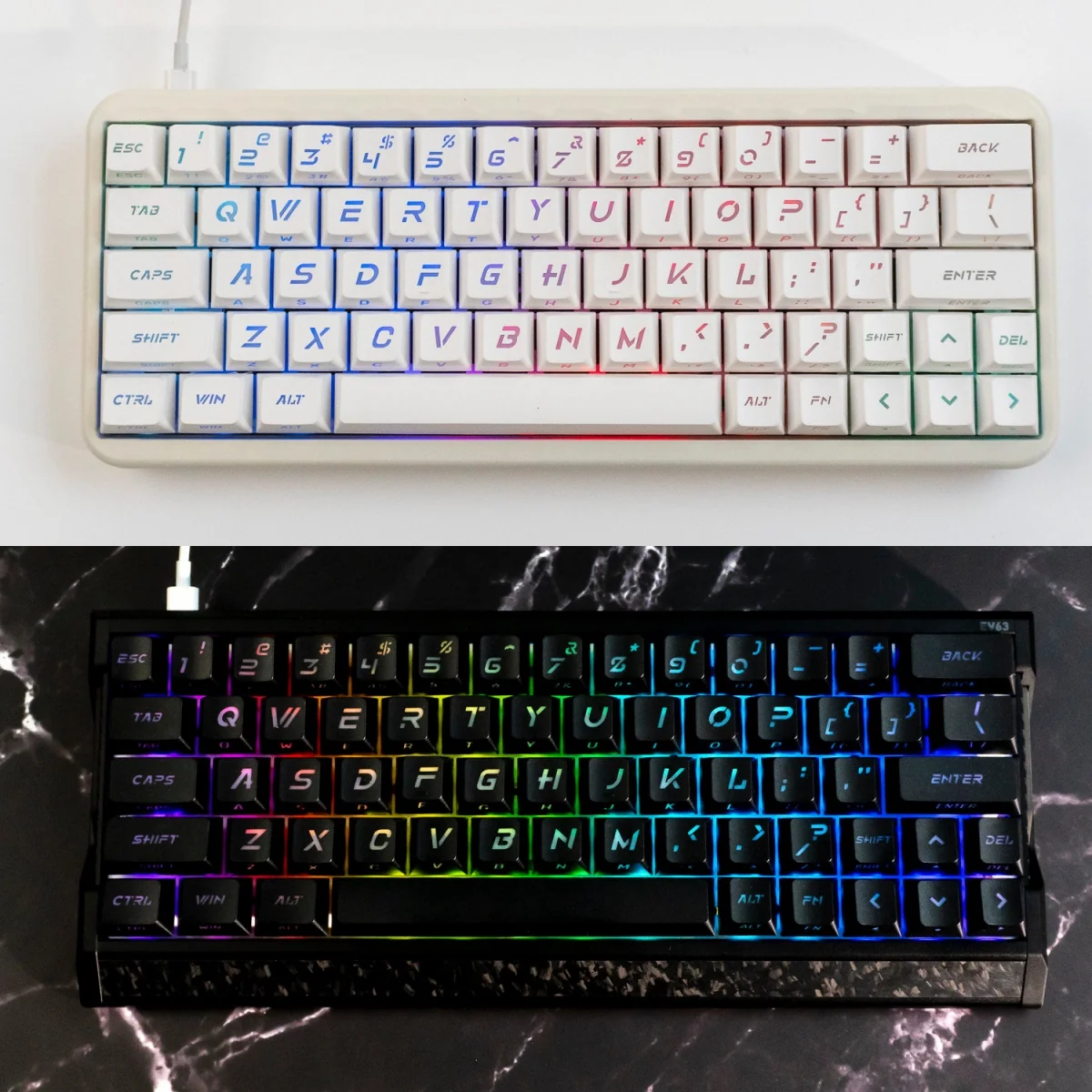
First check: do the legends transmit light?
Many attractive keycaps use dye-sublimated or printed legends on an opaque cap. Those legends stay opaque when the keyboard lights turn on. RGB may create a halo between the keys, but it will not make the letters themselves glow. This can look beautiful on a desk and still be difficult for someone who needs to find an unfamiliar key at night.
For illuminated letters, look for a listing that explicitly says shine-through legends, translucent legends, or a comparable construction. Double-shot construction alone does not guarantee this: both plastics can be opaque. The legend material has to let light pass.
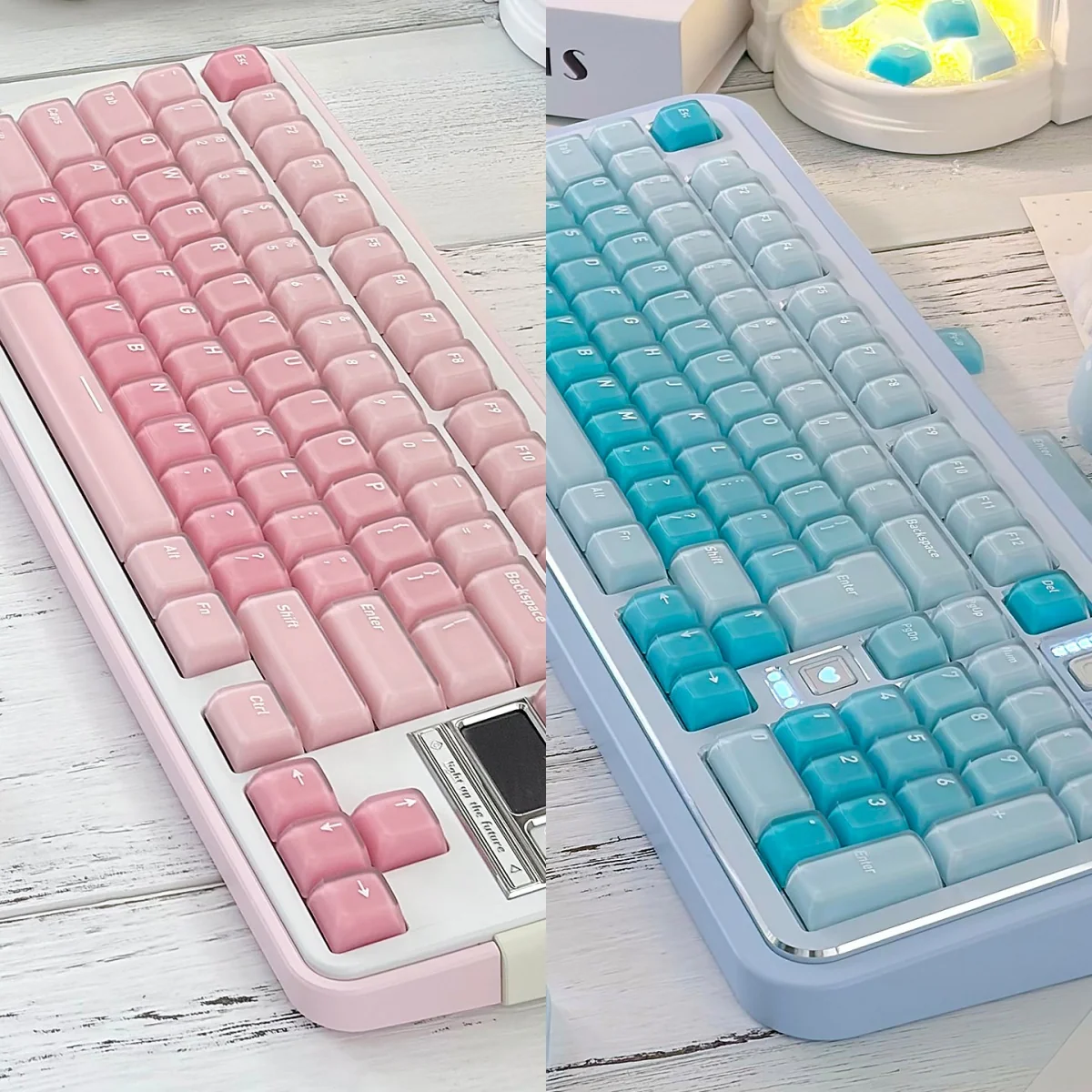
Pudding and translucent-shell keycaps solve a different problem. Their sides or lower walls allow more light to escape, making the keyboard glow more strongly. That does not automatically make the top legends clearer. If readability matters, confirm both the shell effect and the legend construction.
Second check: are your LEDs north-facing or south-facing?
On many mechanical keyboards, the LED sits either above the switch stem (north-facing) or below it (south-facing). Traditional top legends are often positioned near the upper edge of the keycap, so a north-facing LED can illuminate them directly. With a south-facing LED, the same legend may receive weaker or less even light.
This is why raising RGB brightness sometimes changes the halo but barely improves the letters. The light source and legend are still misaligned. Some newer keycaps are designed specifically to carry light from south-facing LEDs toward the top legend. Others move the legend to the front or lower side of the cap, closer to the LED.
Keychron’s south-facing shine-through set, for example, identifies the LED orientation it is designed for. That is the kind of compatibility statement worth looking for. A generic “backlit keycap” label is less useful.
Side legends can be the practical answer
Side-printed legends place the letters on the face toward the user. On a south-facing board, that face is also closer to the LED, so the light path can be more direct. Side legends also keep the top surface visually clean, which works well for minimalist or patterned sets.
The tradeoff is viewing angle. A front legend is easy to see from a normal seated position but less visible when you stand over the keyboard. If you mostly touch-type, side legends can give you a useful reference without turning every key into a bright square. If you regularly look straight down at the board, large top legends may remain the better choice.
Color contrast still matters when the lights are off
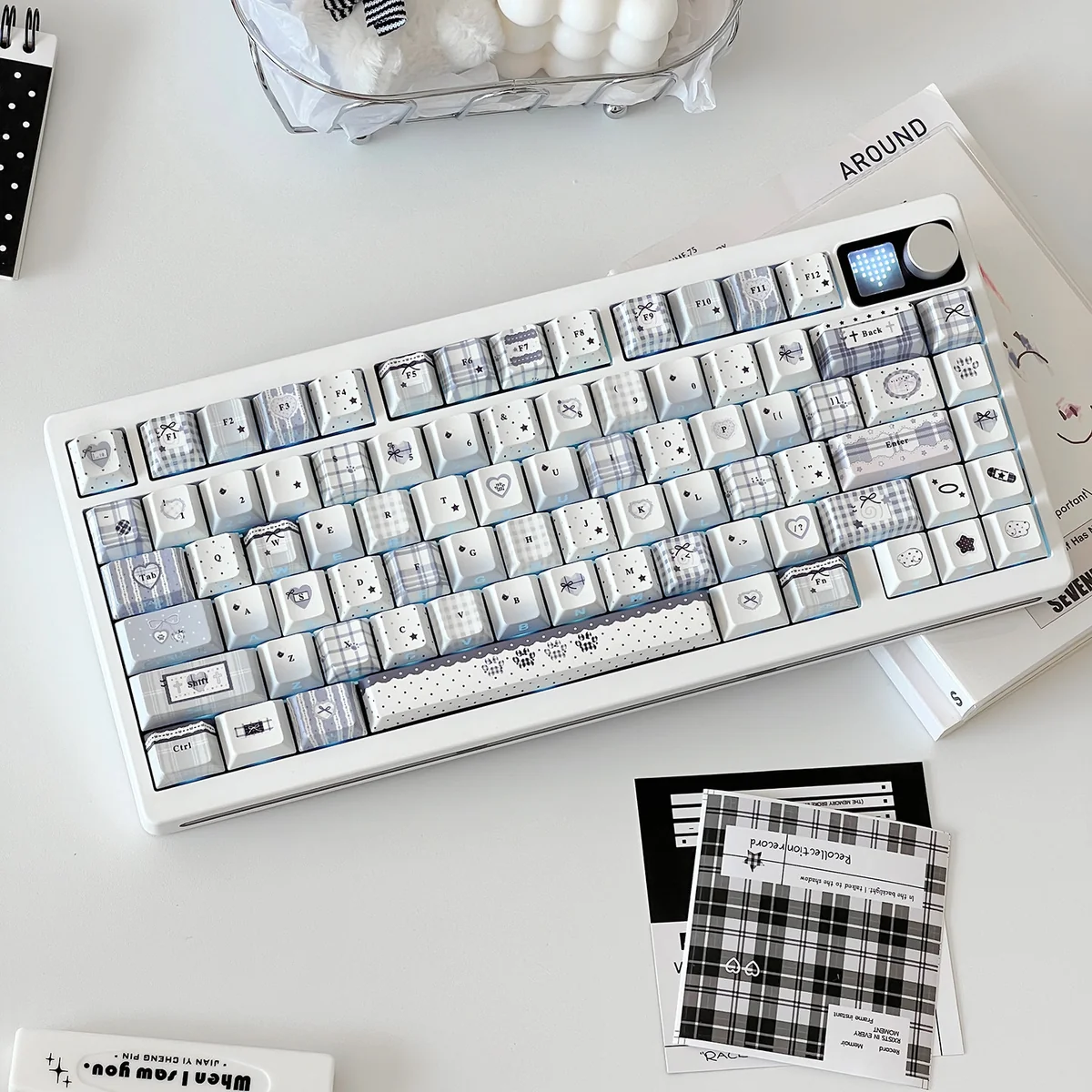
Good contrast helps in normal room light and during the day. Light legends on a dark cap, or dark legends on a light cap, are usually easier to scan than two similar tones. Legend size and stroke thickness matter too: a large, simple typeface remains readable at a glance, while a thin decorative font may disappear even when the colors technically contrast.
Backlight color can change perceived contrast, but there is no universal “best” RGB color. White is a useful test because it reveals uneven illumination without adding a strong tint. If white light does not make the legends readable, cycling through blue, green, or red usually will not fix the construction or alignment problem.
A five-point buying check
- Confirm the legend type. Look for explicit shine-through or translucent-legend wording.
- Check LED orientation. Find out whether your board is north-facing or south-facing.
- Match the legend position. Top legends, south-optimized top legends, and side legends use different light paths.
- Inspect the actual kit layout. Make sure the set includes the key sizes your keyboard needs; our keycap compatibility chart guide explains what to compare.
- Decide whether you need readable legends or a stronger glow. Pudding walls and transparent shells emphasize RGB; they do not always emphasize letters.
If the listing does not show the keycaps lit on a keyboard or does not state the legend construction, ask before buying. A close-up of an unlit cap cannot prove how evenly the legend will glow.
What to do with the keycaps you already own
Start with white light at medium brightness and reduce other bright sources behind the monitor. Clean the cap surface, because skin oils can soften the contrast of matte legends. If the legends are opaque, use a small desk light rather than running the keyboard at maximum brightness; more LED power cannot turn opaque plastic translucent.
You can also replace only the keys you need to identify quickly, such as Escape, arrows, or a number row. Mixing a few high-contrast accent keys is often simpler than replacing an entire set. Our guide to mixing and matching keycaps covers the profile and row-shape checks that keep those accents comfortable.
The useful rule
For low-light readability, buy for the light path first and the palette second. The best-looking color combination cannot compensate for opaque legends or an LED that sits far from the printed area. Once the construction and orientation match, color contrast becomes the finishing choice instead of a guess.