

A silver keyboard can look machined from metal even when every keycap is plastic. That is not automatically a problem. “Metallic,” “metal-look,” and “silver” usually describe the finish, while the material line tells you what the keycap is actually made from.
The difference matters because painted PBT, coated PC, electroplated ABS+PC, and a real metal artisan key do different jobs. One may give you a complete silver board at a practical weight. Another is designed to glow. A solid metal key is more often a single accent than a full typing set.
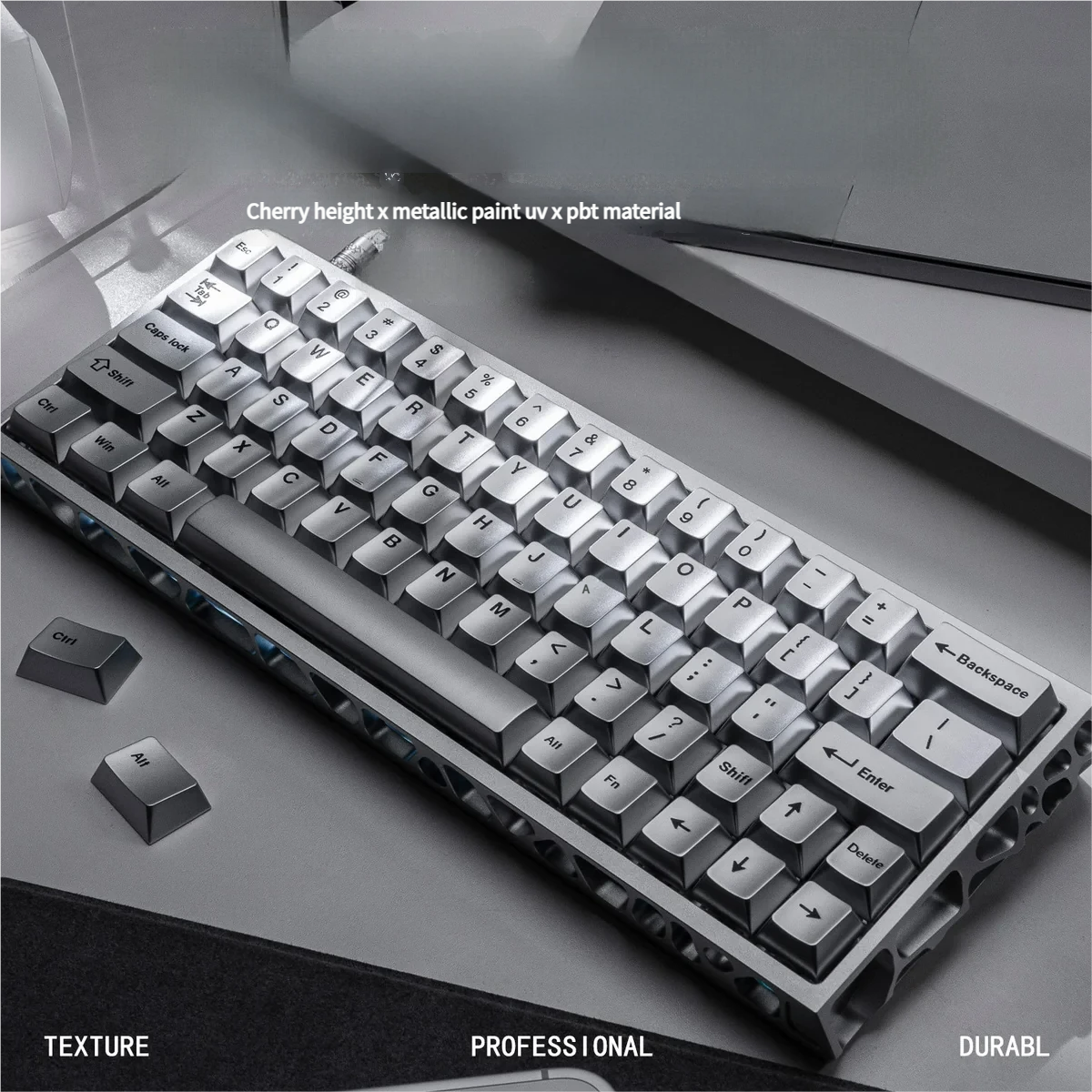
Read the material before the color name
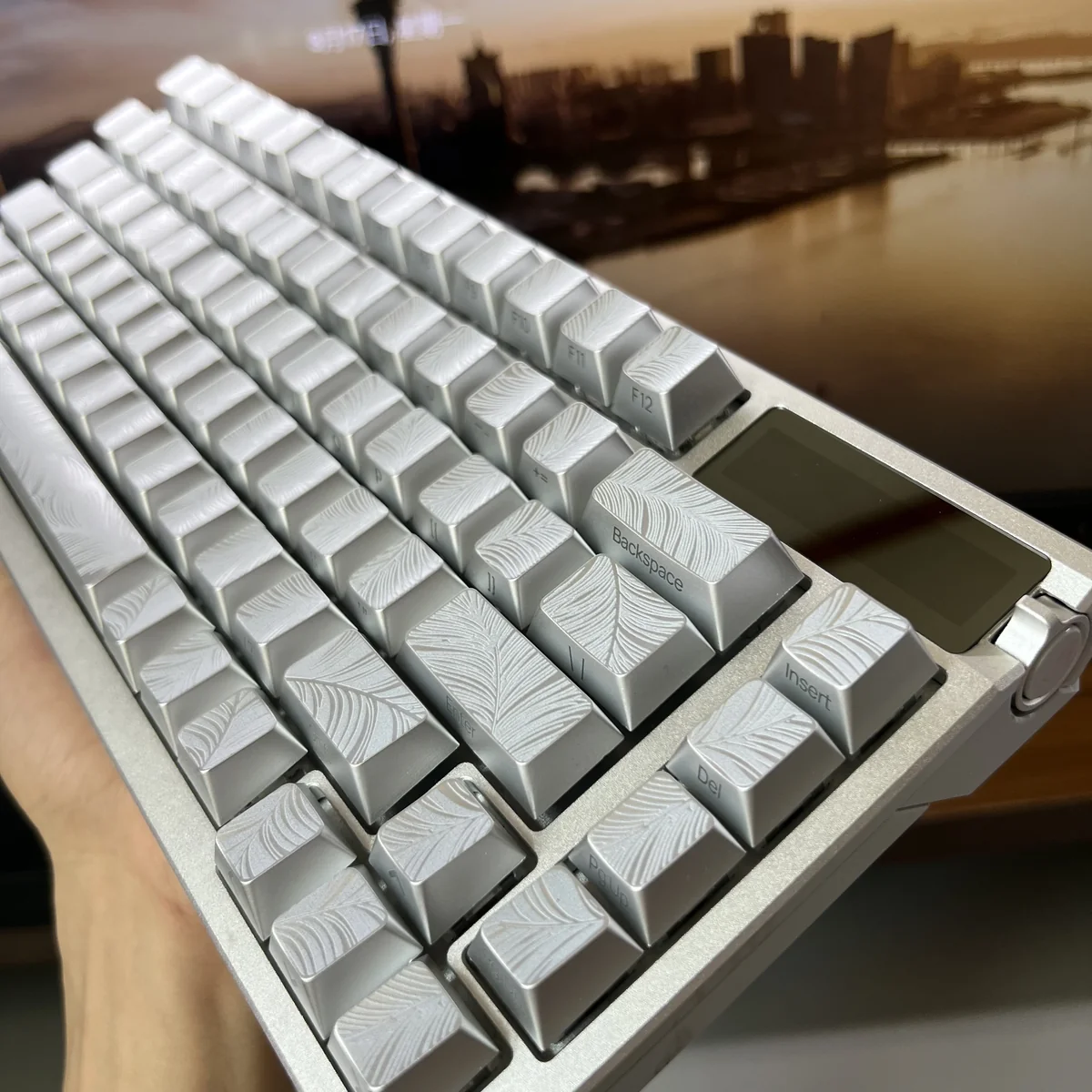
A recent OSHID display at Tokyo Game Show 2026 made this distinction unusually clear: the photographed set looked like aluminum, but the on-site report described it as resin and assessed it as likely PBT with five-sided dye-sublimation. XVX takes a different route with its Venom set. The manufacturer lists ABS+PC construction, double-shot molding, and electroplating for its liquid-metal appearance.
Those examples show why the product title is not enough. Two keycap sets can both look metallic in a photo while using different plastics, finishes, legend methods, and lighting designs.
| Type | What it is | What it does best | What to check |
|---|---|---|---|
| Metallic-painted PBT | PBT plastic with a metallic surface finish | A complete silver look with familiar plastic-keycap weight | Legend method, coating description, and kit coverage |
| Metallic-painted PC | Polycarbonate with a silver coating | Glossy effects and designs that use backlighting | Whether legends or sides actually transmit light |
| Electroplated ABS+PC | A plastic structure with an electroplated metallic finish | Highly reflective, liquid-metal or futuristic styling | Profile, finish care, and whether the set is transparent or shine-through |
| Real metal artisan | A single keycap made from metal or a metal alloy | A small, jewelry-like focal point | Weight, height, switch-stem fit, and whether it is sold as one key |
PBT with metallic paint: the practical full-board option
PBT is commonly chosen for full keycap sets because it gives you a conventional plastic-keycap structure across the whole keyboard. A metallic coating can then change the visual language completely. Instead of looking soft or toy-like, the board can echo a silver laptop, monitor arm, lamp, or brushed-metal desk accessory.
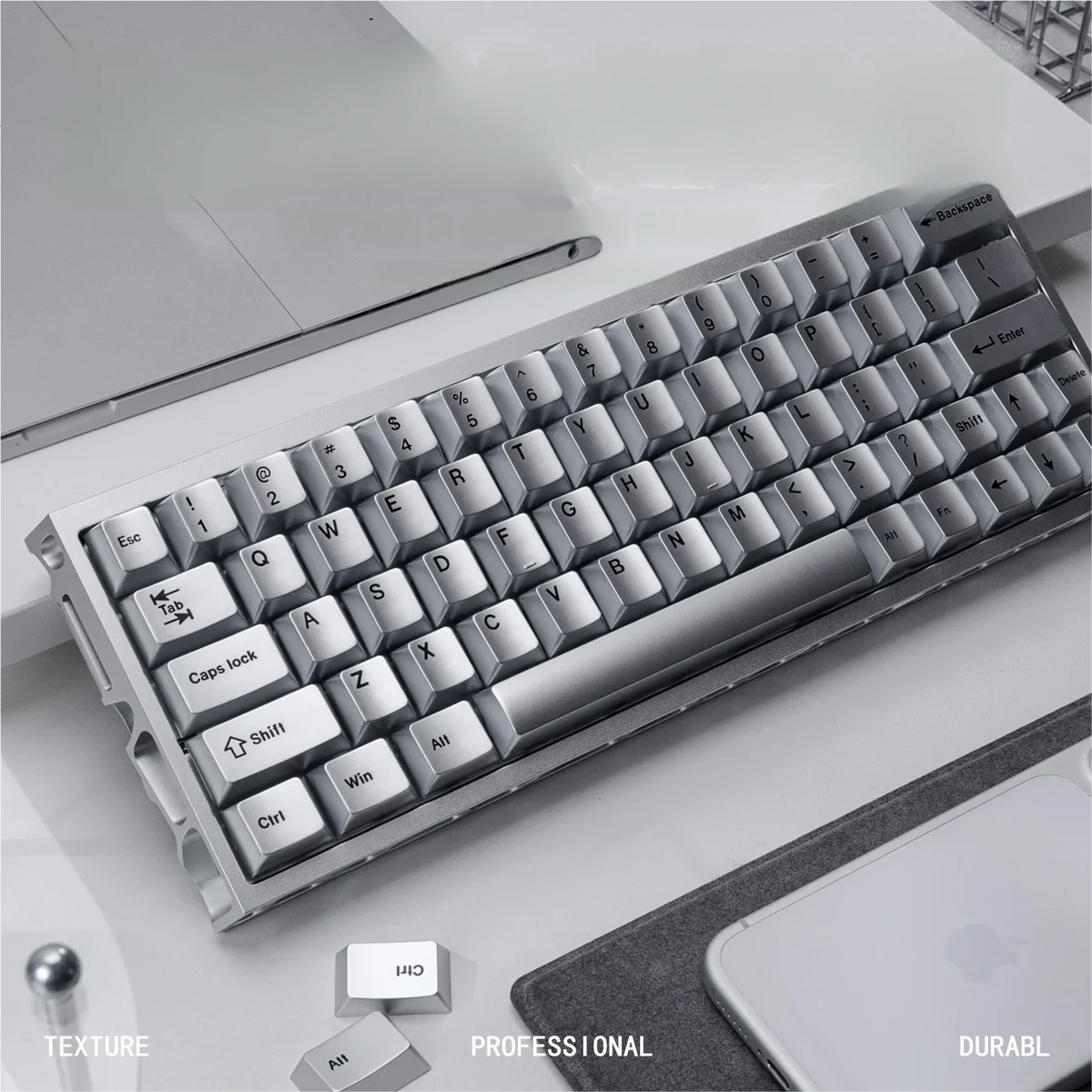
The Premium Metallic Silver Cherry Keycap Set is a useful example. It is listed as high-grade PBT with metallic paint, uses a Cherry profile, and includes more than 120 keys. That makes it a styling choice for a whole board rather than one decorative switch.
This route suits someone who wants the keyboard to read as silver from across the desk but still wants the familiar layout and weight distribution of a plastic set. It also gives the finish enough surface area to tie together other neutral hardware. On a black case it looks sharper and more technical; on a white or silver case it creates a quieter, more continuous block.
PC with metallic paint: use light as part of the design
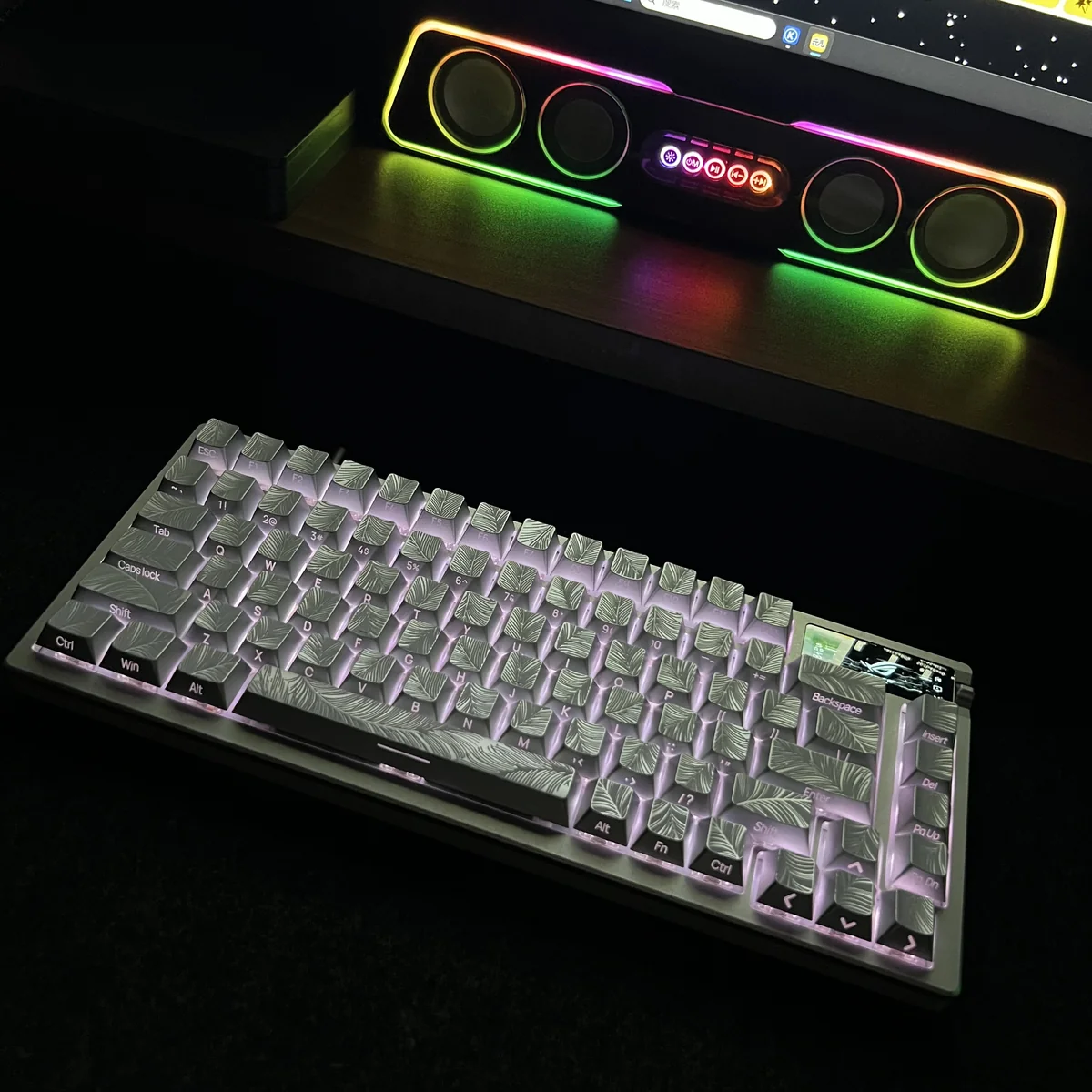
Polycarbonate becomes more interesting when the design is built around light. The important question is not simply “Does it look shiny?” but “Where does the light come through?” Top legends, side legends, gaps, and translucent lower sections create very different nighttime results.
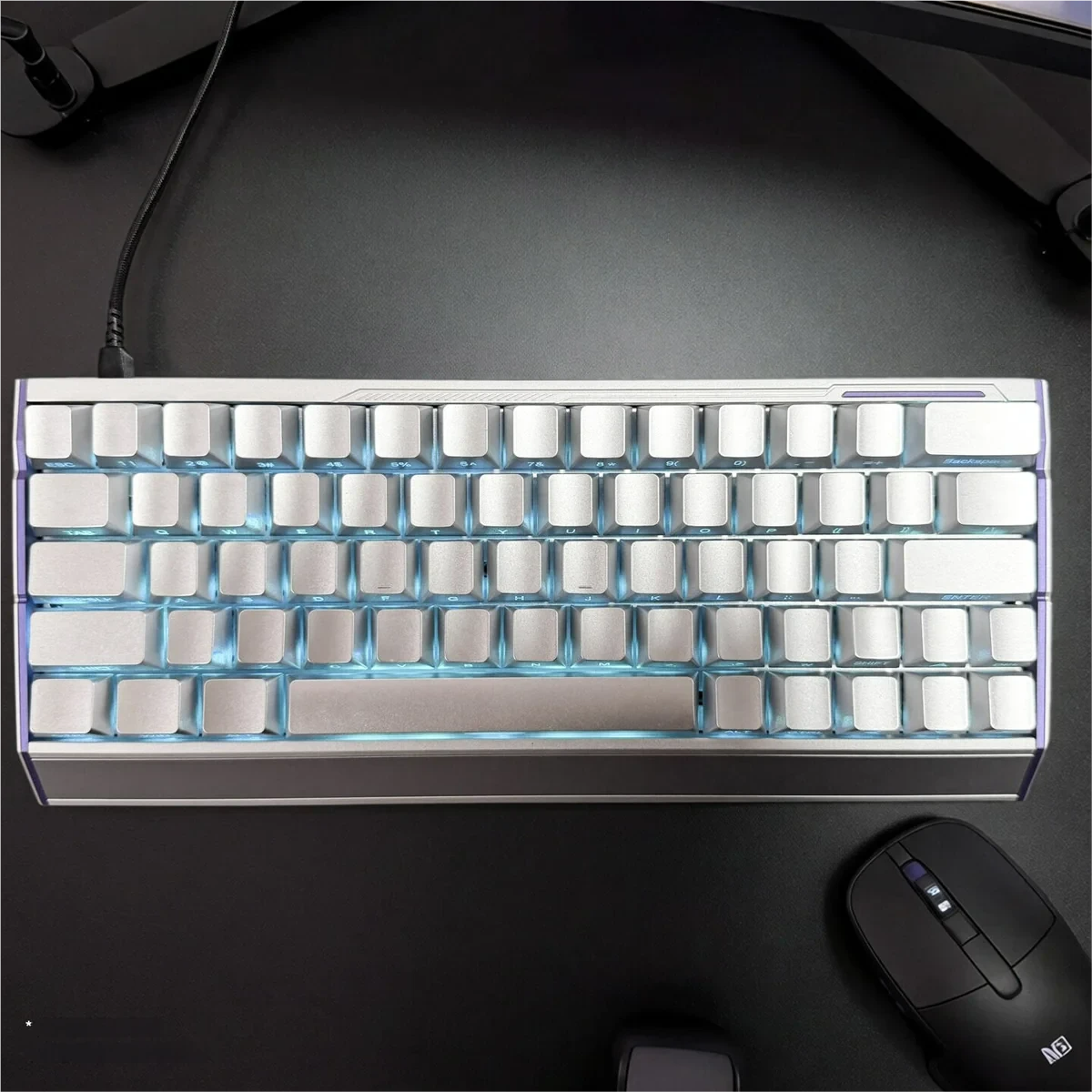
The Luminous Silver Cherry Keycap Set is listed as PC with silver metallic paint and embossed legends. It is intended to transmit light, so the reflective daytime surface is only half of the design. With RGB off, it reads as a clean silver set. With lighting on, the legends introduce contrast and make the board feel more futuristic.
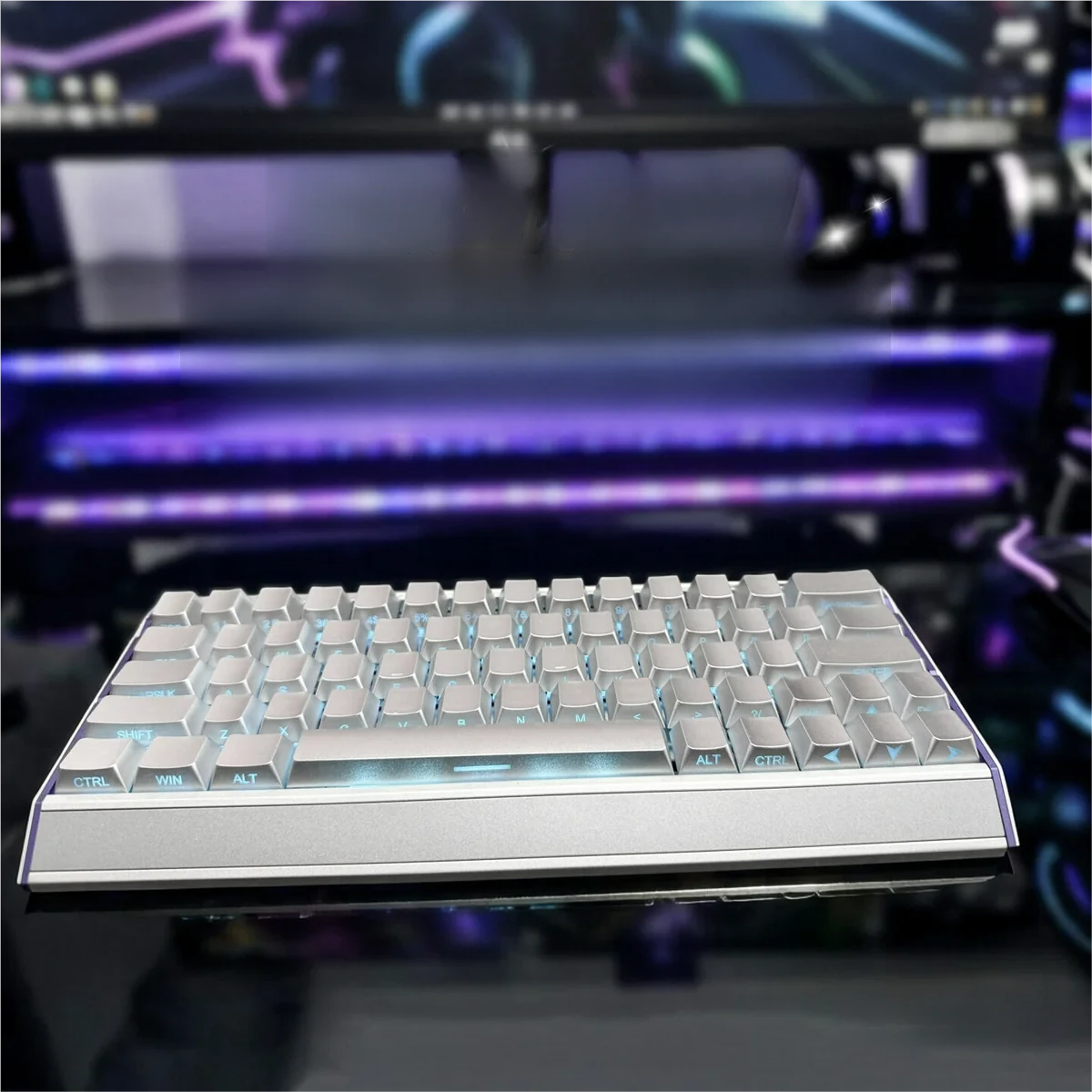
If you prefer a darker top surface and a softer edge glow, side-engraved designs move the visual activity away from the center of each key. The Ethereal Silver Feather Cherry Keycap Set uses PC, a metallic silver finish, and side-engraved luminous legends. Its 96-key kit is specified for layouts up to 87 keys, so this is exactly where the kit diagram matters more than the color.
Real metal works best as punctuation
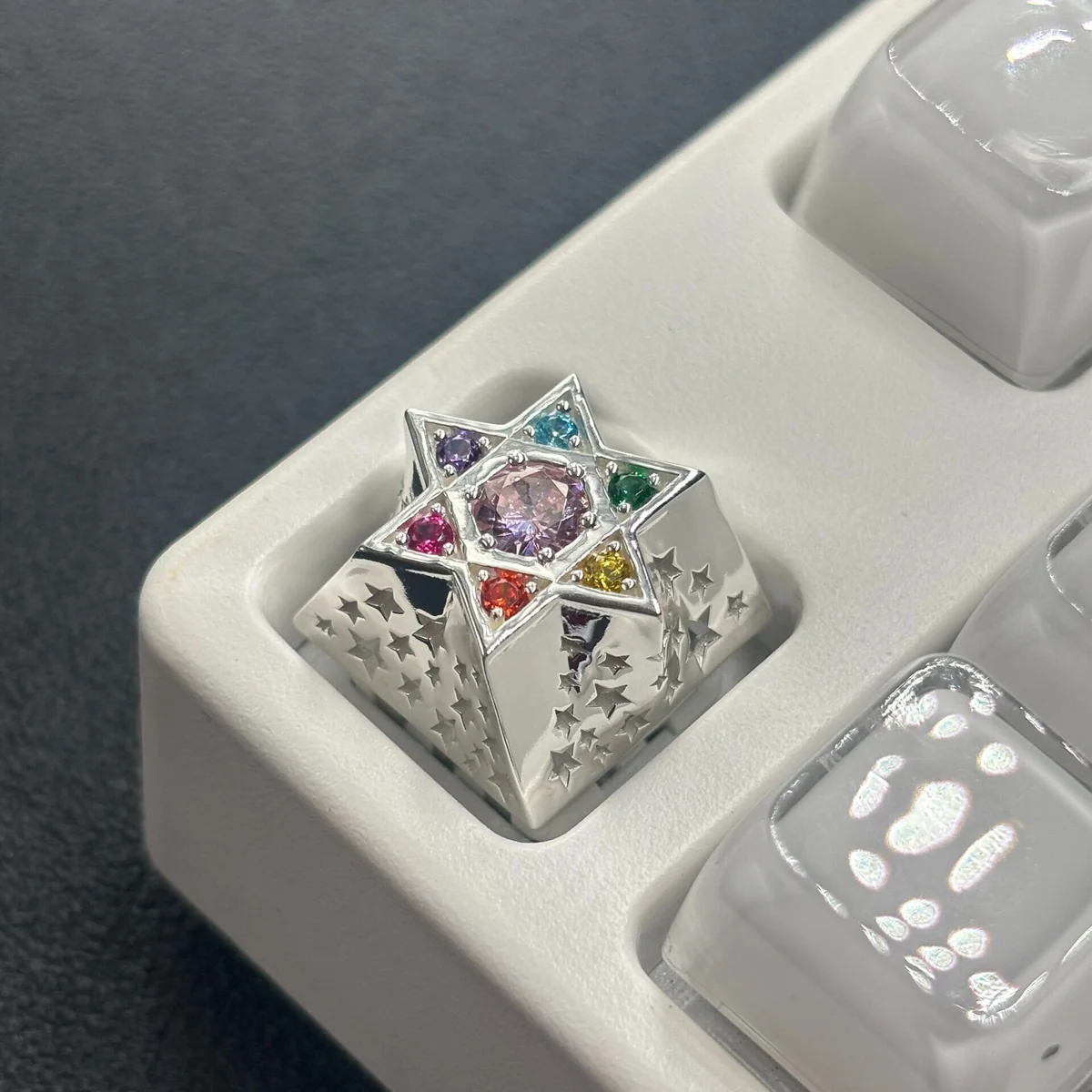
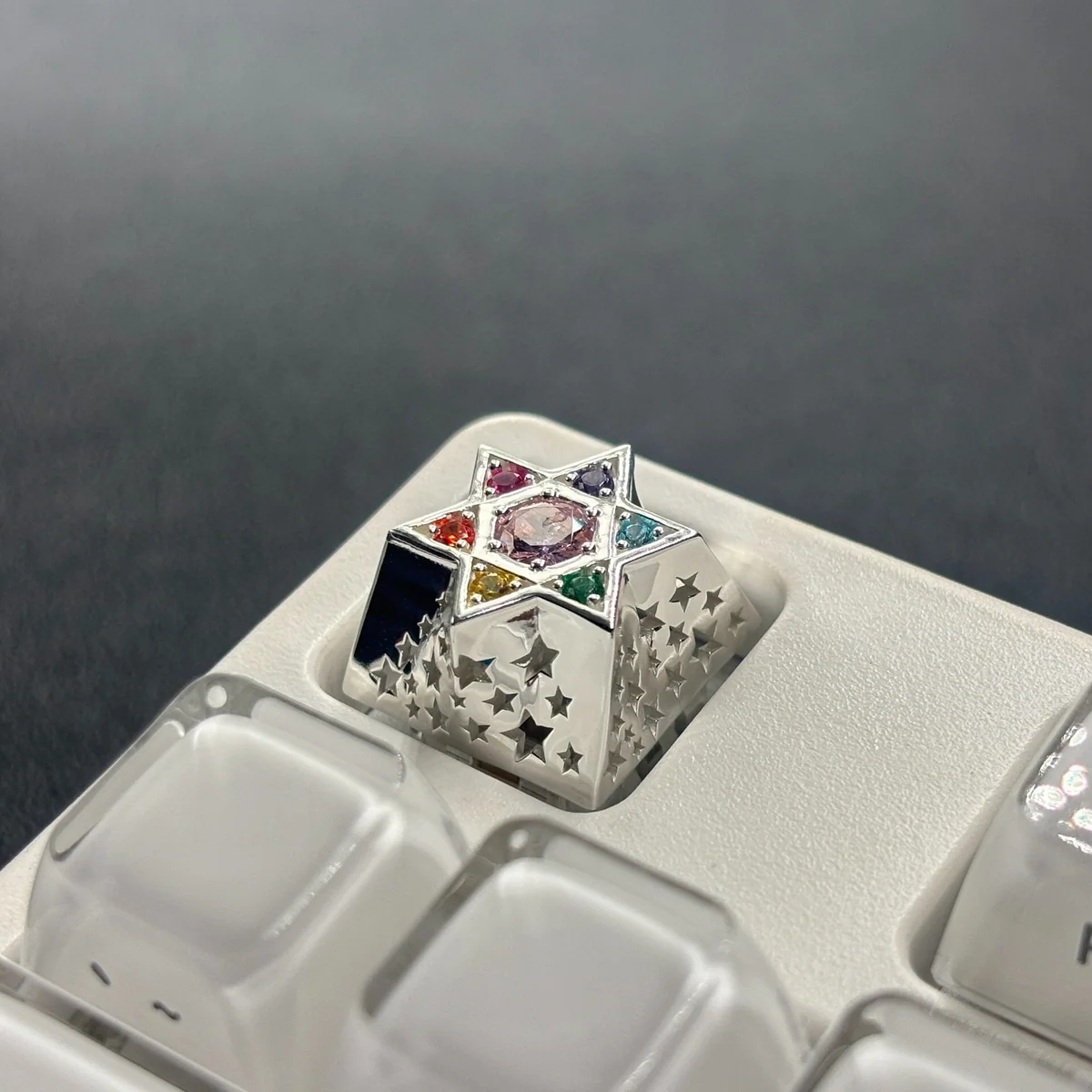
A real metal keycap gives you something a coating cannot: the material itself is part of the object. That can change the weight, temperature, edge definition, and the way highlights move across a small sculpted surface. It can also make one key feel much more prominent than its neighbors.
That is why real metal often makes the most sense as an artisan accent on Escape, Enter, or another key you want to notice. Covering an entire board is a different engineering and budget decision. A single metal artisan lets the material act like jewelry while the surrounding plastic set handles everyday typing.
Four questions to ask before buying metal-look keycaps
- Is the listed material PBT, ABS, PC, ceramic, or metal? Treat “metallic” as a color or finish unless the material line explicitly says metal or metal alloy.
- Is the product a full set or one artisan key? Product photos can make a single decorative key look like part of a complete set. Check the quantity and kit image.
- Do you want reflection or illumination? A reflective coating works with room light. Shine-through or side-lit legends need compatible keyboard lighting to create their intended effect.
- Does the kit fit your exact layout? Check the right Shift, bottom-row modifiers, spacebar, Enter key, and navigation column. “Fits 75%” is not a substitute for comparing key sizes.
Choose the effect, not the label
If you want a complete silver keyboard that still behaves like a conventional plastic-keycap board, start with a metallic-painted PBT set. If RGB is part of your setup, a PC design with luminous or side legends makes the light useful rather than hiding it. If you want one precious-looking detail, use a real metal artisan as the focal point.
The best metal-look setup is not necessarily the one with the most metal. It is the one where the material, finish, lighting, and number of accent keys all support the same visual idea.
Source note: the OSHID material assessment comes from Greenkeys’ Tokyo Game Show 2026 report. XVX construction details come from the manufacturer’s Venom product page. Product specifications and availability can change; check each current listing before ordering.